
The Philosophy of Mind
Georg Wilhelm Friedrich Hegel
$ 5.99
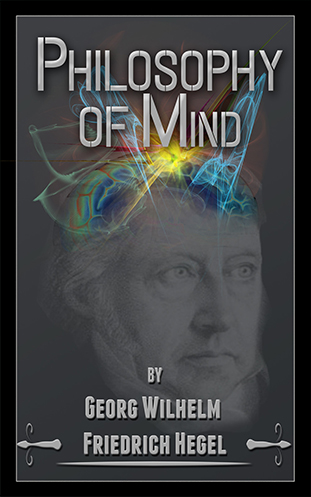
Georg Wilhelm Friedrich Hegel (August 27, 1770 – November 14, 1831) was a German philosopher and an important figure of German idealism. He achieved wide renown in his day and, while primarily influential within the continental tradition of philosophy, has become increasingly influential in the analytic tradition as well. Although he remains a divisive figure, his canonical stature within Western philosophy is universally recognized.
Hegel's principal achievement is his development of a distinctive articulation of idealism sometimes termed "absolute idealism", in which the dualisms of, for instance, mind and nature and subject and object are overcome.
His philosophy of spirit conceptually integrates psychology, the state, history, art, religion, and philosophy. His account of the master–slave dialectic has been highly influential, especially in 20th-century France.
Of special importance is his concept of spirit (Geist: sometimes also translated as "mind") as the historical manifestation of the logical concept and the "sublation" (Aufhebung: integration without elimination or reduction) of seemingly contradictory or opposing factors; examples include the apparent opposition between nature and freedom and between immanence and transcendence.
Hegel has been seen in the 20th century as the originator of the thesis, antithesis, synthesis triad, however, as an explicit phrase, this originated with Johann Gottlieb Fichte.
Read Classical Gems hand-picked selection of favourite Fiction and Philosophy.
Features
- Multiple Formats
- Use Across Multiple Devices
- Tablets, Smartphones and PC.
- Formats include: PDF, EPUB, AZW3, MOBI.
- Read Anywhere: On the Bus, During a Lunch Break, Waiting in a Doctor's Office...
- Immediate Download of Digital Books once purchased
- Share the Literature with Unlimited Devices and Friends